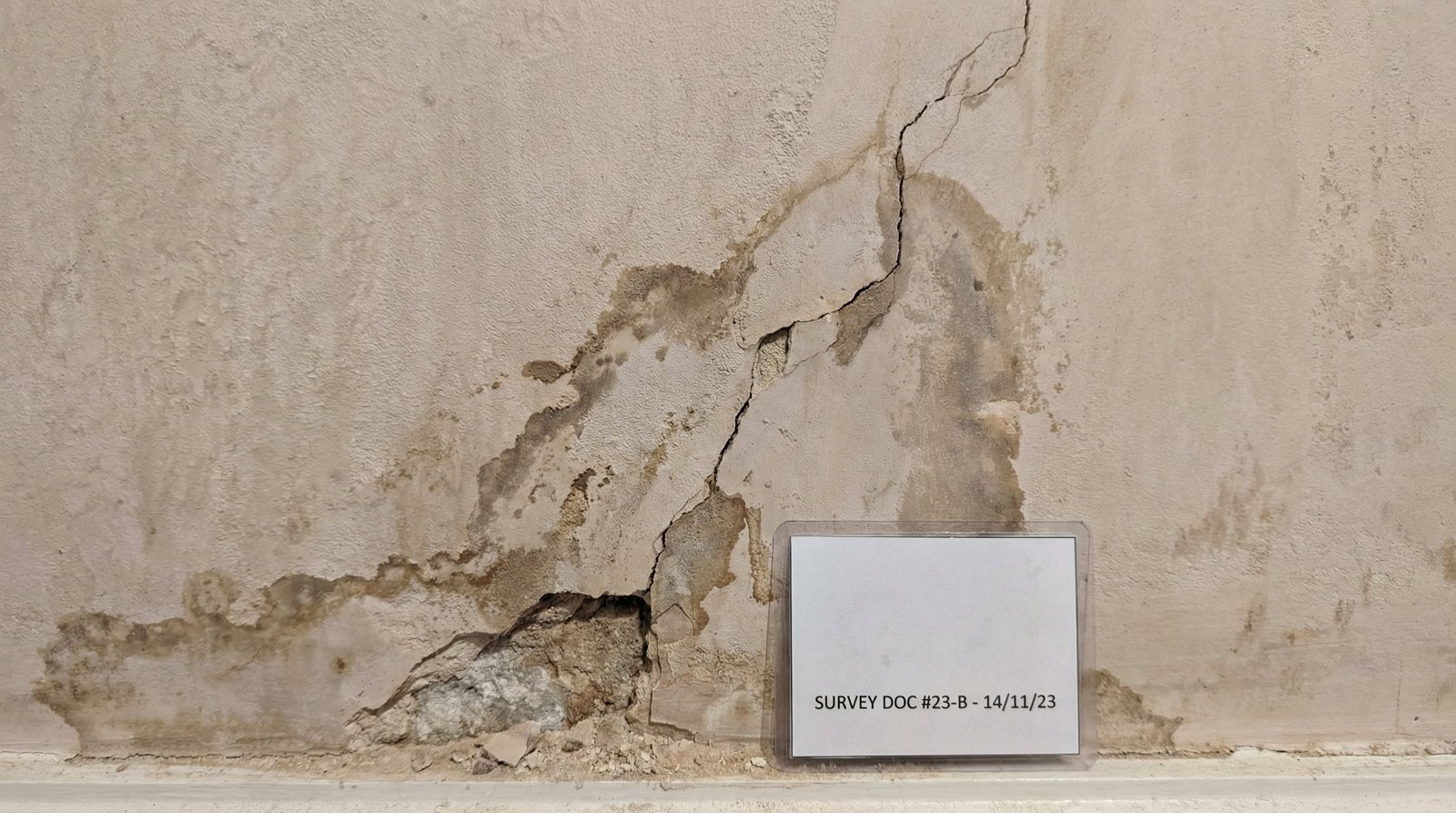
Identifying building defects is one of the most crucial skills for property buyers, homeowners, landlords, and tenants. As chartered building surveyors with extensive experience in building pathology, we help clients understand, identify, and resolve building defects every day. This comprehensive guide explains the most common building defects, how to identify them, and what action to take when defects are discovered.
What Are Building Defects?
Building defects are flaws, faults, or failures in building construction, materials, or maintenance that affect the structural integrity, safety, functionality, or value of a property. These defects range from minor cosmetic issues to major structural problems requiring immediate attention and significant repair costs.
As expert witness building surveyors, we categorize building defects into three main types:
1. Design Defects
Design defects occur when buildings are poorly designed or planned. These might include inadequate structural calculations, insufficient drainage design, poor ventilation planning, or inappropriate material specifications. Design defects often become apparent years after construction and can be costly to remedy because they require fundamental changes to the building's design.
2. Construction Defects
Construction defects arise from poor workmanship, incorrect installation, or failure to follow building regulations during construction. Examples include improper foundations, inadequate waterproofing, incorrect roof construction, or substandard electrical installations. These defects may be hidden initially but typically manifest within the first few years of a building's life.
3. Maintenance Defects
Maintenance defects develop when properties are not properly maintained over time. These include deterioration of materials, blocked gutters causing water damage, failed sealants, or neglected decorative repairs. While often preventable, maintenance defects can lead to serious structural issues if left unaddressed.
Common Building Defects: Identification and Warning Signs
Our chartered building surveyors encounter numerous building defects during building surveys and expert witness work. Here are the most common defects and how to identify them:
Structural Defects
Subsidence and Settlement: Subsidence occurs when the ground beneath a building moves downward, causing the foundations to sink unevenly. Warning signs include:
- Diagonal cracks wider than 3mm, particularly around doors and windows
- Cracks that are wider at the top than the bottom
- Doors and windows that stick or won't close properly
- Cracks in external brickwork, especially at building corners
- Rippling or bulging of internal walls
- Gaps between walls and floors or between walls and ceilings
Subsidence is often caused by clay soil shrinkage during dry periods, tree roots extracting moisture from soil, leaking drains, or mining activity. As expert witnesses, we frequently provide professional opinions on subsidence claims, investigating causes and recommending remedial solutions.
Foundation Failures: Foundation defects can result from inadequate design, poor construction, or ground movement. Signs include visible cracks in foundation walls, tilting or leaning walls, separation between foundation and walls, and differential settlement creating uneven floors. Foundation repairs are often expensive and complex, requiring specialist contractors and structural engineers.
Dampness Problems
Rising Damp: Rising damp occurs when groundwater rises through masonry via capillary action. This affects the lower parts of walls, typically up to one meter from ground level. Identifying features include:
- Tide marks on walls at approximately 1 meter height
- Peeling paint, wallpaper, or plaster at low level
- Damp, musty smell in rooms
- White salt deposits (efflorescence) on walls
- Rotting skirting boards or deteriorating plaster
- Damp patches that worsen during wet weather
Rising damp prevention requires effective damp proof courses (DPC), which can fail over time or be bridged by external ground levels, rendering, or internal debris. Our building surveys always check DPC condition and effectiveness.
Penetrating Damp: Penetrating damp occurs when water enters buildings through walls, roofs, or windows due to defects. Unlike rising damp, penetrating damp can occur at any level. Common causes include:
- Defective roof coverings or flashings
- Blocked or leaking gutters and downpipes
- Cracks or gaps in external walls
- Failed or missing pointing in brickwork
- Defective window or door seals
- Inadequate cavity trays above windows
Condensation: Condensation is the most common form of dampness in modern properties, caused by warm, moist air meeting cold surfaces. While not strictly a building defect, condensation indicates ventilation or insulation problems. Signs include:
- Water droplets on windows, especially in mornings
- Mould growth on walls, particularly in corners
- Musty odours in bathrooms, kitchens, or bedrooms
- Damp patches on external walls
- Deterioration of window frames and seals
Roof Defects
Roof defects are among the most serious building problems because they can lead to extensive water damage throughout a property. As chartered building surveyors, we always conduct thorough roof inspections during building surveys. Common roof defects include:
Roof Covering Failures: Whether slate, tile, or flat roof coverings, failure allows water ingress. Warning signs include missing or slipped tiles, cracked slates, blistering or cracking of flat roof materials, visible light through roof coverings from inside the loft, and water stains on ceilings or in roof spaces.
Flashing Defects: Flashings seal junctions between roofs and walls, chimneys, or adjacent structures. Defective flashings are a major source of leaks. Look for gaps between flashings and walls, cracked or perished mortar fillets, corroded or damaged metal flashings, and missing or inadequate overlaps.
Gutter and Downpipe Problems: Defective rainwater goods cause water to overflow and saturate walls, leading to penetrating damp and potential structural damage. Common issues include blocked gutters filled with debris, leaking joints or cracks, sagging or poorly supported gutters, inadequate fall preventing water flow, and downpipes discharging too close to foundations.
Timber Defects
Wet Rot: Wet rot affects timber with persistent high moisture content (above 20%). It's common in areas exposed to water like window frames, door frames, and roof timbers near leaks. Signs include darkened, softened timber that feels spongy, cracking along the grain, fungal growth, and a characteristic damp, musty smell.
Dry Rot: Despite its name, dry rot (Serpula lacrymans) requires moisture to start but can then spread through relatively dry timber. It's the most serious timber decay, capable of traveling through masonry to find new timber. Identification features include:
- Timber that crumbles into cube-shaped pieces
- Cotton wool-like white mycelium on timber surfaces
- Mushroom-like fruiting bodies producing rust-red spore dust
- Yellow or grey root strands growing across masonry
- Distinctive mushroom smell
As expert witness building surveyors, we frequently provide evidence in disputes involving dry rot, as its treatment is expensive and often contentious in dilapidations claims.
Woodworm: Wood-boring insects create small holes and tunnels in timber. Common beetles include common furniture beetle, death watch beetle, and house longhorn beetle. Look for small flight holes (typically 1-2mm diameter), fine powdery dust below holes, tunnels visible in exposed timber, and weakened, crumbling timber in severe cases.
Wall Defects
Cavity Wall Tie Failure: Cavity walls rely on metal ties connecting inner and outer leaves. Corrosion causes ties to expand, cracking mortar beds. Signs include horizontal cracks every 450mm (tie spacing), bulging of external walls, and vertical cracks at regular intervals.
Brickwork and Pointing Deterioration: Poor quality or eroded pointing allows water penetration. Spalling bricks (surface breaking away) indicates water freezing within bricks, suggesting quality issues or long-term water exposure. As chartered building surveyors, we assess brickwork condition during all building surveys, noting areas requiring repointing or brick replacement.
Electrical and Plumbing Defects
Electrical Issues: While not always visible, electrical defects pose serious safety risks. Warning signs include frequent circuit breaker trips, flickering lights, burning smells, scorch marks around outlets, and outdated wiring systems lacking modern safety features.
Plumbing Problems: Defective plumbing causes water damage and health hazards. Common issues include leaking pipes (visible water stains or dampness), low water pressure indicating blockages or undersized pipes, gurgling sounds suggesting drainage issues, and corroded or deteriorating pipe materials.
Building Pathology: Understanding Defect Causes
Building pathology is the study of building defects, their causes, and appropriate remedial treatments. As expert witness building surveyors specializing in building pathology, we investigate defects systematically to determine causes and recommend proportionate repairs.
Defect Investigation Process
Our professional approach to defect investigation includes:
Visual Inspection: Thorough examination of all accessible building elements, photographing defects, and noting their location, extent, and severity. We use specialist equipment including moisture meters, thermal imaging cameras, and endoscopes for concealed defects.
Document Review: Examining building plans, specifications, construction records, and maintenance history to understand the building's construction and identify potential defect causes.
Testing: Conducting tests such as moisture content readings, concrete carbonation tests, mortar analysis, or structural load calculations when necessary to diagnose defects accurately.
Analysis: Determining root causes rather than just symptoms. For example, cracking might be a symptom of subsidence, but the cause could be clay shrinkage due to tree roots. Effective remedial work addresses causes, not just symptoms.
Property Disrepair and Tenant Rights
Property disrepair occurs when landlords fail to maintain properties according to their legal obligations. As expert witness building surveyors, we regularly provide evidence in disrepair claims, assessing property condition and advising on reasonable repair costs.
Landlord's Repairing Obligations
Under the Landlord and Tenant Act 1985, landlords of residential properties must maintain:
- The structure and exterior of the property (walls, roofs, windows, doors)
- Installations for water, gas, electricity, and sanitation
- Installations for space heating and water heating
Tenants are generally responsible for minor internal repairs and keeping the property in reasonable condition. However, landlords cannot avoid their obligations by claiming lack of notice if defects are obvious or the landlord was aware of them.
Reporting Building Defects
Tenants discovering building defects should:
- Report defects to landlords in writing immediately
- Photograph defects and keep dated records
- Allow landlords reasonable time to inspect and repair
- Seek professional advice if landlords fail to act
Our chartered building surveyors provide independent assessments of property disrepair, helping tenants and landlords understand repair obligations and reasonable timescales for remedial work.
When to Instruct an Expert Witness Building Surveyor
Professional advice from chartered building surveyors is valuable when:
- Buying Property: Building surveys identify defects before purchase, allowing informed decisions and negotiation
- Discovering Serious Defects: Expert opinion on causes, appropriate repairs, and costs
- Disputes: Impartial professional opinions for dilapidations claims, disrepair cases, or boundary disputes
- Litigation: Expert witness evidence in accordance with CPR Part 35
- Insurance Claims: Professional assessment of damage and repair specifications
- Maintenance Planning: Comprehensive building surveys identifying repair priorities
Expert Witness Services for Building Defects
As RICS chartered surveyors and accredited expert witnesses, we provide impartial professional opinions on building defects for litigation, arbitration, and alternative dispute resolution. Our expert witness services include:
Expert Witness Reports: Detailed reports analyzing defects, their causes, appropriate remedial work, and costings. Reports comply with CPR Part 35 requirements and clearly state matters within our expertise.
Single Joint Expert Appointments: Acting impartially for both parties in disputes to provide objective professional opinions, facilitating settlement and reducing litigation costs.
Court Attendance: Providing oral evidence when required, explaining technical matters clearly to judges and juries.
Mediation and Negotiation Support: Assisting dispute resolution through professional opinions on defect severity and reasonable repair costs.
Preventing Building Defects
Prevention is always better than cure. Our advice for preventing building defects includes:
Regular Maintenance
- Annual roof and gutter inspections, particularly after severe weather
- Regular repointing of brickwork before deterioration becomes serious
- Maintaining good drainage around buildings
- Prompt repair of minor defects before they worsen
- Regular servicing of heating, plumbing, and electrical systems
Monitoring and Early Detection
- Watching for warning signs like cracks, dampness, or deterioration
- Seasonal checks after winter or heavy rain
- Professional building surveys every 5-10 years
- Keeping maintenance records and photographs
Quality Construction and Materials
- Using appropriately qualified contractors
- Ensuring building regulations compliance
- Specifying quality materials suitable for location and use
- Obtaining building warranties for new construction or major works
Cost Implications of Building Defects
Repair costs vary enormously depending on defect severity and extent. Indicative costs (as of 2026) include:
- Repointing: £30-60 per square meter
- Roof repairs: £500-5,000+ depending on extent
- Damp proof course injection: £500-1,500 per property
- Dry rot treatment: £1,500-10,000+ depending on spread
- Subsidence underpinning: £10,000-50,000+ per corner
- Cavity wall tie replacement: £2,000-5,000 per elevation
Early identification and prompt repair typically cost far less than allowing defects to worsen. As chartered building surveyors, we help clients prioritize repairs based on urgency and budget, ensuring structural integrity and safety are addressed first.
Conclusion
Identifying building defects requires knowledge, experience, and systematic investigation. Whether you're a property buyer, homeowner, landlord, or tenant, understanding common building defects and their warning signs helps protect your property investment and ensure safe, habitable buildings.
Our team of chartered building surveyors and expert witnesses has extensive experience in building pathology, defect identification, and dispute resolution. We provide comprehensive building surveys, expert witness reports, and professional advice on all aspects of building defects and property disrepair.
If you've discovered building defects and need professional advice, expert witness evidence for litigation, or a comprehensive building survey, contact our team of experienced chartered building surveyors today.